There are stones that collectors speak about in terms of investment, and there are stones they speak about with something closer to reverence. The padparadscha sapphire belongs to the second category.
The name itself comes from the Sinhalese word for the lotus blossom. In Sri Lankan tradition, the lotus carries symbolic weight: it blooms in mud and water yet emerges pristine, a metaphor for clarity arrived at through patience. The colour the gem trade now calls padparadscha is named after the lotus precisely because no single word in any language quite captures the particular pink-orange that defines these stones.
What makes a padparadscha
The gemological community has never settled on a single, universally agreed definition. The International Colour Council has offered parameters: typically a saturation of colour between pink and orange, with the orange component visible but never dominant. In practice, the assessment is made by trained eyes, in proper light, with experience as the deciding factor.
This is a narrow window. It means that the vast majority of sapphires, even beautiful ones, fall outside the padparadscha classification. A stone need not be flawless to be remarkable, but its colour must sit in the exact balance.
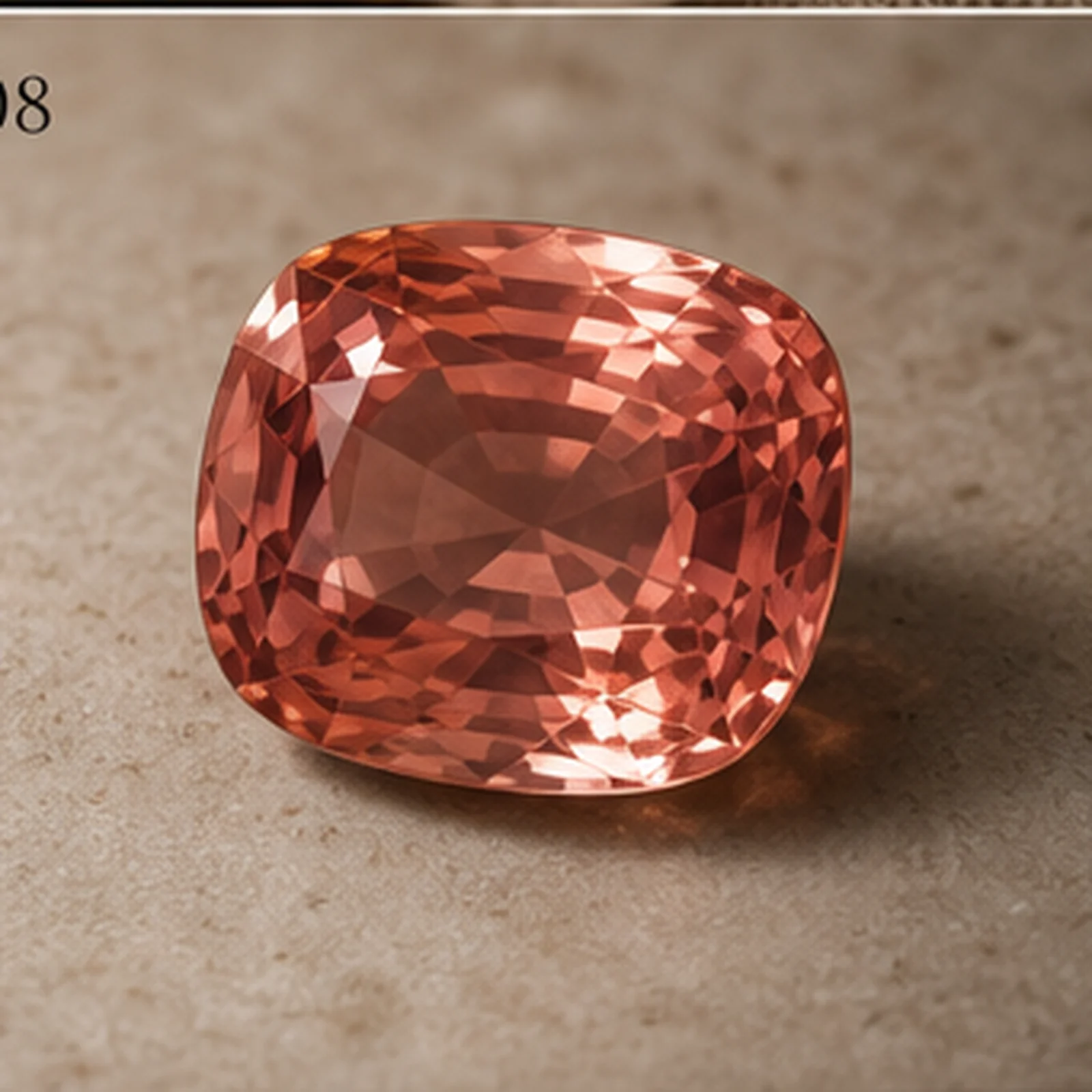
A true padparadscha holds its balance between pink and orange with a gentleness that makes the colour feel alive.
Origin & geography
Sri Lanka is the classical source for fine padparadscha sapphires. The country's gemstone deposits, concentrated in regions like Ratnapura and Elahera, have produced the finest examples for centuries. The geological conditions, alluvial gem gravels formed over millions of years by river systems carrying material down from ancient metamorphic rock, have given Ceylon stones a quality of colour and clarity that other sources rarely match.
Deposits in Madagascar and Tanzania have added to the global supply in recent decades, though many connoisseurs maintain that Sri Lankan stones possess a quality of colour that distinguishes them.
A 3.8ct padparadscha sapphire from Ratnapura showing the characteristic pink-orange balance.
Treatment & disclosure
Heat treatment is common across the sapphire market. The practice is ancient and remains standard: sapphires are heated to approximately 1700 to 1800 degrees Celsius to enhance or stabilise colour. The practice is accepted across the industry and must always be disclosed.
The difference in value between an unheated padparadscha and its heated equivalent is substantial. An unheated stone, one whose colour has developed naturally and requires no thermal alteration, commands a meaningful premium because true natural colour at this saturation is exceedingly rare. Independent certification from a laboratory like GRS confirms treatment status, and no responsible buyer should acquire a padparadscha without it.
What to look for
If you are considering a padparadscha, look first at the colour balance. Examine the stone under daylight, incandescent light, and if possible under LED. The colour should remain stable and pleasing across all three. The pink and orange should sit in harmony, neither overwhelming the other.
Clarity matters, but padparadscha sapphires are rarely flawless. Most contain inclusions, some visible, many only apparent under magnification. What matters is that the inclusions do not interrupt the colour or compromise the stone's structural integrity.
Size is relevant because padparadschas above two carats become exponentially rarer. A one-carat padparadscha of fine quality is a notable stone; a three-carat example approaches the truly exceptional. Stones above five carats, with full saturation and natural colour, are among the rarest gemstone events of any given year.
A final thought
The padparadscha invites the viewer in. Its colour reveals more as you look at it longer, and its quietness is its strength.
If you would like to see padparadscha sapphires held by the house, or to discuss a stone of your own, we welcome the conversation. The padparadscha deserves an eye that knows how to look at it.